

Why Homeowners Are Taking Longer To Say Yes In 2026
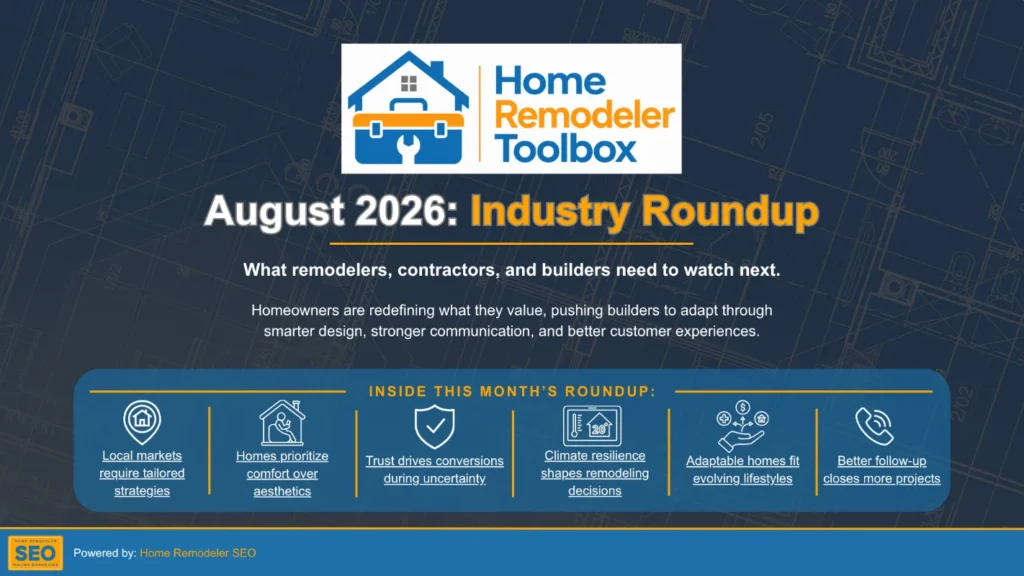
The remodeling market is not simply getting slower or faster. It is becoming more selective, more regional, and more influenced by how homeowners research and evaluate their options. Across the latest industry data, homeowners are still investing in their properties, but many are taking longer to decide where their money should go and which contractor deserves their trust. At the same time, design priorities are shifting toward comfort, flexibility, climate resilience, and long-term livability. That creates a different challenge for remodelers, builders, and contractors because generating interest is only part of the job. You also need to keep homeowners engaged while they compare proposals, evaluate priorities, and decide whether the project makes sense right now. Our August Home Remodeler Toolbox Industry Roundup takes a deeper look at these changes and what they mean for contractors navigating today's market. This preview highlights a few of the most important signals without giving away the full monthly report. If you want the complete monthly industry perspective, connect with Home Remodeler SEO to get access to future Home Remodeler Toolbox roundups and the insights behind them.
Remodeling Demand Is Becoming More Regional
One of the most important signals from August is that remodeling activity is not moving evenly across the country. NAHB's first-quarter projections showed major differences between states, with California, Texas, and Florida among the largest remodeling markets while several other states experienced faster dollar growth.
For contractors, national headlines can therefore be misleading. A strong national remodeling forecast does not automatically mean your local service area is experiencing the same conditions.
Local housing age, population growth, home equity, weather exposure, housing inventory, and affordability can all influence what homeowners need and what they can afford.
That makes localized marketing increasingly important. A remodeler serving older neighborhoods can create content around updating aging homes. A contractor in a weather-sensitive market can explain climate-specific improvements. A company working in an area with limited housing inventory can speak to why homeowners are choosing additions or renovations instead of moving.
The opportunity is to make your expertise feel local rather than generic. Homeowners should be able to see that your company understands the homes, challenges, and project decisions they face in their own community.
Homeowners Are Choosing Function Over Flash
Home design is also moving toward long-term livability. Houzz identified warmer palettes, personalized details, natural materials, and adaptable spaces as important design directions, while features such as curbless showers, accessible storage, ADUs, and flexible secondary spaces are becoming part of everyday design.
The larger shift is simple: homeowners want their homes to work better.
A kitchen remodel may need to improve storage and traffic flow. A bathroom renovation may need to provide greater comfort and accessibility. A finished basement may need to serve as a guest area, home office, entertainment space, or future living area.
This gives remodelers an opportunity to change how they market their work. Instead of showing only beautiful finished spaces, explain the problem the project solved and how the design improves daily life.
That approach also gives search engines and AI platforms more useful information. Content that connects remodeling services with homeowner needs, project decisions, locations, and outcomes provides stronger context than generic descriptions of what a contractor offers.
Buyer Hesitation Is Making Follow-Up More Valuable
Perhaps the most important conversion signal in the August roundup is the growing gap between estimates and signed projects. HIRI found that 27% of homeowners had received a quote for a project that had not started, while quote requests increased from 17% to 20%. At the same time, only 38% had completed a project during the previous 90 days.
That suggests something important for remodelers: an estimate does not necessarily represent the end of the sales process.
A homeowner may still be comparing contractors, reviewing the budget, discussing the project with family, or trying to understand why one proposal costs more than another.
That makes follow-up a major opportunity.
Instead of repeatedly asking whether a homeowner is ready to sign, contractors can provide useful information during the decision period. A clear explanation of the proposal, a relevant project example, a breakdown of project phases, or an offer to review questions can help remove uncertainty.
The goal is not to pressure homeowners into a decision. It is to make the decision easier.
This is where marketing and sales need to work together. The same educational content that attracts a homeowner can continue supporting them after the estimate.
Home Performance and Adaptability Are Becoming Bigger Opportunities
Another important theme from the August roundup is that homeowners are increasingly thinking about how their homes perform under changing conditions. Harvard reported that 13.2 million U.S. households experienced uncomfortably hot indoor conditions for at least 24 hours in 2023. The report also connected excessive indoor heat with equipment breakdowns, inadequate cooling capacity, insulation issues, power outages, and other housing deficiencies.
For remodelers, that expands the conversation beyond appearance.
Roofing, windows, insulation, ventilation, HVAC improvements, shading, and other building-envelope decisions can affect comfort and home performance. Flexible design also matters as families change. A room may need to support guests today, remote work tomorrow, and changing household needs years from now.
These trends create opportunities for contractors who can connect individual services to bigger homeowner goals.
A window replacement can be part of a broader comfort strategy. An addition can create adaptable living space. A bathroom remodel can improve accessibility and long-term usability. A roofing project can become part of a larger conversation about durability and home performance.
FAQs About The 2026 Remodeling Market
Why Are Remodeling Leads Taking Longer To Convert?
Homeowners may still want to remodel, but they are taking more time to evaluate cost, timing, project scope, and contractor fit. The August industry roundup found that more homeowners were reaching the quote stage without immediately starting their projects. That makes consistent, helpful follow-up increasingly important for contractors.
How Can Remodelers Adapt To Regional Market Differences?
Remodelers should connect their marketing to the conditions of the communities they serve. Local content can address older housing, regional weather, permitting considerations, housing inventory, common renovation needs, and neighborhood-specific challenges. This helps homeowners see the contractor as locally knowledgeable rather than interchangeable.
What Design Trends Should Remodelers Focus On?
The strongest opportunity is not simply following a particular color, material, or style. Homeowners are showing greater interest in comfortable, adaptable, functional spaces that support changing lifestyles. Remodelers can highlight flexible rooms, accessible bathrooms, better storage, natural materials, and layouts designed around real daily routines.
How Can Contractors Improve The Estimate-To-Contract Process?
Contractors can start by treating the estimate as part of an ongoing decision process rather than the final sales step. Clear proposals, structured follow-up, project examples, answers to common questions, and simple explanations of scope can help homeowners understand their options and feel more comfortable moving forward.
Why Does Home Performance Matter More To Remodeling Marketing?
Homeowners increasingly connect remodeling with comfort, energy use, resilience, and long-term usability. Contractors can explain how roofing, insulation, windows, ventilation, HVAC, and design choices work together. This positions the contractor as a problem solver who understands how the home performs, not simply as someone who installs a specific product.

Turn Changing Homeowner Behavior Into Better Opportunities With Home Remodeler SEO
The August trends point to a market where simply generating more inquiries is not enough. Contractors need to understand where demand is strongest, what homeowners value, and what causes interested prospects to hesitate. They also need marketing that continues working after someone requests an estimate. That means combining local visibility, useful content, strong project storytelling, credible reviews, and thoughtful follow-up. Home Remodeler SEO helps remodelers, builders, and roofing companies turn these kinds of industry signals into practical marketing opportunities. Our monthly Home Remodeler Toolbox Industry Roundups are designed to give contractors a closer look at the trends shaping homeowner behavior, construction, remodeling, and digital visibility. If you want access to future editions, connect with Home Remodeler SEO and stay informed about the changes that could affect your market and your pipeline. The goal is not to chase every new trend. It is to understand what matters, respond intelligently, and build a business homeowners continue to trust.


