

Key Takeaways
- Adaptability is Leadership: Executive leadership requires the same creative problem-solving muscles as complex design.
- Culture Over Blame: Focus on communication fixes, not individual fault, to create a respectful, collaborative culture.
- Invest in Education: Continuous learning is non-negotiable for survival in an evolving industry.
- Document Everything: Start writing SOPs and documenting company structure early ("Better done than perfect") to ensure organizational stability.
- AI is Essential: If you're too busy to learn AI now, you will be too busy dealing with the problems caused by inefficiency later.
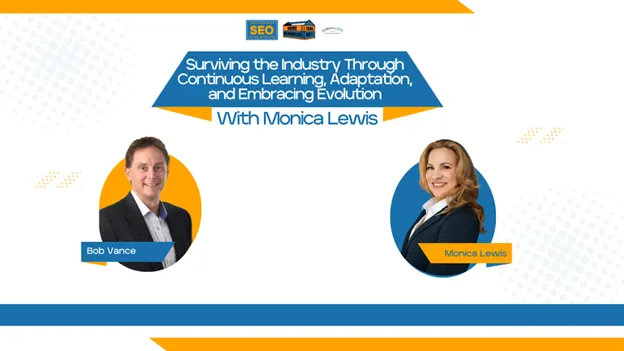
On the latest episode of Home Remodeler Toolbox, we were honored to speak with Monica Lewis, President and Partner at J.S. Brown and Company in Columbus, Ohio. Her 23-year trajectory from interior designer to company president is a testament to the power of continuous learning, strategic adaptation, and an unwavering commitment to exceptional company culture. In an industry facing unprecedented talent shortages and rapid technological change, Monica’s insights offer a vital blueprint for survival and growth.
From Interior Design Sketches to Leadership Strategy
Monica’s professional foundation was built not on framing or drywall, but on aesthetics and problem-solving. She graduated from the Columbus College of Art and Design (CCAD) with a degree in interior design, driven by a passion for making "bigger, more substantial changes" in a space. Before stepping onto a job site, she gained a broad technical underpinning by working in supply showrooms, mastering electrical, plumbing, HVAC systems, and appliances.
The defining moment that launched her remodeling career came while she was working in a showroom, helping clients who were frustrated because they liked a product but doubted it would fit their floor plan. Monica would often sketch quick layout ideas, noting potential structural or mechanical impediments, to help them communicate with their contractors. One contractor recognized her innate ability to design solutions and offered her a job to learn how to sell and design projects.
After gaining foundational training, including NKBA certifications, she found her long-term home at J.S. Brown and Company. Over 23 years, she progressed from design sales, managing sales, handling social media and marketing, and eventually stepping into the Vice President role in 2019 before becoming President and Partner in January 2024. She emphasizes that she stayed because the company’s values aligned with hers.
Stepping into executive leadership required a significant "shift," but Monica quickly realized that the creative problem-solving skills required for design were perfectly suited for management. She views internal leadership challenges exactly like remodeling projects: first, identify the pain point; second, develop designs/solutions; third, write a strategy for accomplishment; and finally, manage and see it through. This process of strategic execution, coupled with the fulfillment she gets from mentoring her team, keeps the role incredibly rewarding.
Breaking the Blame Game: Why Teamwork Trumps Turmoil in Remodeling
Monica argues strongly against the adversarial relationship that often develops between the "office side" (sales and design) and the "field side" (production) in construction companies. In contentious environments, mistakes often dissolve into a blame cycle—designers blaming production for not reading the specs, or production blaming the design for errors.
At J.S. Brown, the culture shifts the focus entirely away from individual fault: "At the end of the day, the client doesn't care whose fault it is. The client cares that it gets reworked and corrected and done properly". Monica mandates that when a problem occurs, it must be recognized as a "communication issue," not a personal failure.
This culture requires "purposeful intent". Since office and field teams don’t often mix, leaders must ensure that both sides respect each other’s talents, recognizing that it takes collaboration to "bring this ship into port". They use project management platforms like Builder Trend to facilitate communication and share appreciation, which fosters mutual respect because the teams understand they are collectively responsible for client happiness.
Recruiting the Future: Addressing the Talent Shortage and the Need for a Marketing Agency for Construction Companies
Monica acknowledged the industry’s historical male dominance but noted the vital push for change. She shared an anecdote from her time in a plumbing showroom, where a plumber, after hearing her precise technical instructions for fixing a faucet, asked, "honey, is there a man I can talk to?". This experience taught her to learn as much as possible, as quickly as possible, noting that sometimes the assumption of her lack of knowledge could actually make her expertise "that much more impressive when you do know the answer".
The industry is currently facing a catastrophic shortage, with over 500,000 skilled workers needed. This lack of supply is hamstringing growth for many remodelers. Monica points out that the shortage is especially acute in field positions.
To address this crisis, the industry needs to create comfortable, safe environments that existing female employees feel confident recommending. More broadly, there is a systemic need to change the perception held by parents and high school guidance counselors, who often push "college, college, college" rather than highlighting the lucrative salaries and urgent demand for skilled trades like plumbers and electricians.
This is where strategic external help becomes crucial. A specialized marketing agency for construction companies can help shift this narrative by developing content that highlights the profitability and pride of craftsmanship inherent in the trades, targeting not just potential recruits, but also the gatekeepers (counselors and parents). Monica is actively involved in this advocacy through the NARI Central Ohio's Women in Remodeling initiative. Furthermore, a dedicated marketing agency for contractors can help companies build employer brand messaging that attracts talent in this highly competitive environment.
The Mandate of Evolution: Why Continuous Education is Non-Negotiable
Monica is a fierce advocate for continuous education, stressing that the remodeling industry must constantly absorb and practice new information—a challenge made complex by the need to integrate modern technologies and products into structures that are often hundreds of years old. She collects industry certifications, even helping NARI develop the Certified Remodeling Designer certification.
For remodelers who claim they are "too busy" to learn or implement new systems, Monica shares a powerful lesson she learned early in her career when she failed to check a cabinet confirmation and the order came in wrong:
"If you don't have time to check the confirmation, how in the world are you going to have time to deal with the problem that it causes later?".
If you don't invest time now to get better and faster at your job, you will not have time to deal with the inevitable consequences of inefficiency later. This principle applies directly to adapting to new technology.
Embracing the Efficiency Revolution: AI for the Modern Remodeler
J.S. Brown is actively integrating Artificial Intelligence (AI) into its operations. The company utilizes the AI functions in its Builder Trend platform, which can now summarize a full week’s work into client updates in less than 30 seconds. They also use Canvas scanning software to digitally create Chief Architect plans, saving tremendous time.
Internally, Monica uses AI extensively for crucial administrative tasks, such as rewriting and updating Standard Operating Procedures (SOPs), refining job descriptions, and creating meeting agendas, allowing her to control the voice while dramatically speeding up the process.
Monica cautions that those reluctant to adopt AI will be left behind. She points out that AI is not stealing jobs; rather, "people who could use CAD stole jobs from people who couldn't". Similarly, designers and sales teams who know how to leverage AI to iterate and refine their work will be far more competitive. A smart marketing agency for construction companies uses AI to enhance content creation and SEO, showing that this technology must be integrated across all departments, including business development.
The advice is simple: use the tools available. AI should be treated like a power sander instead of a sanding block. Furthermore, those who are wary of AI should use it precisely to influence its trajectory and ensure its appropriate use in the industry, keeping human creativity at the forefront.
FAQs about marketing agency for construction companies
Why should a remodeling company hire a marketing agency for construction companies when they are already too busy to take on new projects?
Many companies are constrained by a labor shortage (over 500,000 needed), preventing growth. A specialized marketing agency for construction companies can shift their focus from simply chasing client leads to strategic recruitment marketing, helping attract the skilled labor needed to support future growth.
Can a marketing agency for contractors help change the systemic perception of the trades?
Yes. Monica noted that guidance counselors and parents often need to be educated on the lucrative salaries and critical demand in the trades. A marketing agency for contractors can execute campaigns designed to reach these gatekeepers and showcase the trades as a viable, long-term career path, supporting initiatives like Women in Remodeling.
Watch Home Remodeler Toolbox Today!
Monica Lewis’s journey—and her forward-thinking approach to culture, talent, and AI—provides a powerful blueprint for remodelers looking to thrive in the next decade. To hear more of Monica's insights, including J.S. Brown’s plans for their 50th anniversary in 2028 and her advice on leveraging AI for internal SOPs, tune into the full episode of Home Remodeler Toolbox.


