

A roofing client of ours was fielding close to 900 calls a month. Phones ringing constantly. And the team still felt like they needed more leads.
When we looked closer, the real number that mattered wasn't call volume, it was a closing rate sitting around 11%. That meant roughly 9 out of every 10 conversations that came in the door were walking back out. Not because the leads were weak. Because the follow-up stopped too soon.
A follow-up system for remodeling leads is a structured, repeatable process, usually 7 to 12+ touchpoints over days and weeks, that keeps every homeowner engaged from first contact until they either book the job or clearly say no. Most remodeling companies don't have a lead problem. They have a follow-up problem, and it's usually the more fixable one.
We dug into this in detail during a recent Home Remodeler SEO webinar on building a follow-up system that wins more jobs, and the roofing example above is one we walked through live. This post covers the core of that conversation.
Why "More Leads" Is Often the Wrong Goal
Generating leads is visible. It's easy to point to a marketing spend and a form-fill count and say the system is working. What's harder to see, and far more valuable to fix, is what happens after someone reaches out.
Homeowners aren't making impulse decisions on a project that might cost tens of thousands of dollars. They're comparing two to five contractors, checking reviews, discussing budget with a spouse or a lender, and waiting for enough clarity to feel confident. That evaluation window can stretch for weeks. Sometimes longer.
If a company only reaches out once or twice and then quietly writes the lead off as "not serious," they're not losing the homeowner's interest. They're losing their own spot in a decision the homeowner is still actively making.
Why Homeowners Go Quiet And What It Actually Means
Silence after an estimate rarely means someone changed their mind. More often, it means they're still deciding, and nobody gave them a reason to reply yet.
During that quiet stretch, a homeowner is typically:
- Comparing pricing across multiple estimates
- Talking through budget with a partner or lender
- Evaluating credibility; reviews, past projects, how the company communicates
- Waiting for something that makes the decision feel safer
A company that stops reaching out after one or two attempts isn't reading disinterest correctly. They're exiting the conversation before the homeowner has even finished having it internally.
The "Pushy" Myth: It's About Value, Not Frequency
Plenty of remodelers hold back on follow-up because they don't want to seem aggressive. That hesitation is understandable, but it's built on a misread of what actually makes follow-up feel pushy.
Pushiness isn't a function of how often you reach out. It's a function of whether each message adds something. "Just checking in" for the third time feels like pressure because it offers nothing new. A message with a realistic project timeline, a straight answer to a common concern, or a relevant before-and-after photo feels like guidance, even if it's the sixth touchpoint that week.
Once every message earns its place, frequency stops being the risk.
What a Real Follow-Up System Looks Like
A follow-up machine isn't a habit or a reminder on someone's calendar. It's a defined structure that removes guesswork from the sales process. The core pieces:
Fast initial response. The first few minutes after a lead comes in often decide whether you're still in the running or already forgotten. Homeowners are frequently contacting several contractors in the same afternoon.
A multi-step sequence. Real follow-up runs 7 to 12+ touches over time, not one call and a voicemail.
A messaging framework. Every touchpoint has a job, building trust, adding clarity, or moving toward a next step, instead of repeating the same "checking in" line.
Re-engagement cycles. A separate process for leads that went quiet, so they get a second chance instead of disappearing from the pipeline entirely.
CRM visibility. A system where every lead is tracked, so nothing depends on one person's memory during a busy week.
Where AI Fits — And Where It Doesn't
AI doesn't replace the relationship that ultimately wins a remodeling job. What it does well is remove the inconsistency that comes from follow-up depending entirely on manual effort.
Tools built into CRMs like GoHighLevel or HubSpot can send an instant text the moment a form is submitted, run a scheduled sequence of emails over the following days, flag a lead that hasn't been contacted in 48 hours, or draft a re-engagement message for someone who went quiet after an early conversation. None of that replaces a human conversation. It just makes sure the conversation happens on time, every time, regardless of how busy the office gets that week.
This is also where visibility and follow-up start to connect. A homeowner comparing contractors is often researching online, reading reviews, checking service pages, sometimes asking an AI assistant which local remodeler seems most credible. Strong remodeling SEO, local SEO signals tied to your service area, and a website built around clear, search-friendly content all feed that same comparison. A company with that kind of credible digital footprint, paired with consistent follow-up, ends up as the trustworthy option at every stage of the homeowner's decision-making journey, not just the first one.
What Changes When Follow-Up Is Done Right
When follow-up becomes a system instead of a habit, conversion improves without a bigger marketing budget. Sales cycles get more predictable. Revenue stops depending on constantly increasing ad spend, because fewer opportunities are lost after that first phone call or form submission.
Most remodeling companies aren't losing jobs because their marketing is weak. They're losing them in the silence that follows a strong first conversation.
FAQ
How often should I follow up before I'm bothering the homeowner? There's no fixed number that guarantees you won't be annoying, what matters is whether each message adds something. If every touchpoint offers a timeline update, pricing clarity, or a useful answer, homeowners generally welcome consistent contact rather than resent it.
What if my team doesn't have time to follow up with every lead this many times? This is usually the sign a system is needed, not more staff. CRM automation and AI tools can handle reminders, scheduled messages, and re-engagement sequences, freeing the team to focus on actual conversations instead of remembering who to call next.
Do I need AI tools to make this work? No. Strong follow-up existed long before AI. What AI adds is consistency. it can flag inactive leads, draft messages, and keep a sequence running even during a company's busiest weeks.
What's the single highest-impact change I can make first? Response speed. Being the first company to respond professionally puts you ahead before the comparison even really starts. After that, make sure every lead has a defined next step instead of relying on someone to remember.
A Clear Next Step
Fixing follow-up doesn't require a new marketing budget or a flood of new leads. It requires a structure that keeps every homeowner in the loop long enough to make their decision, and keeps your company front of mind when they do.
Our recent webinar, “Building The Follow-Up System That Wins More Jobs,” walks through the framework behind a stronger follow-up process, including the four pillars that help remodeling companies create consistency, build trust, and convert more of the opportunities they already have.
Watch the full webinar to uncover where your follow-up process may be leaving opportunities behind and learn how AI and automation can support your team without replacing the human relationships that win projects.
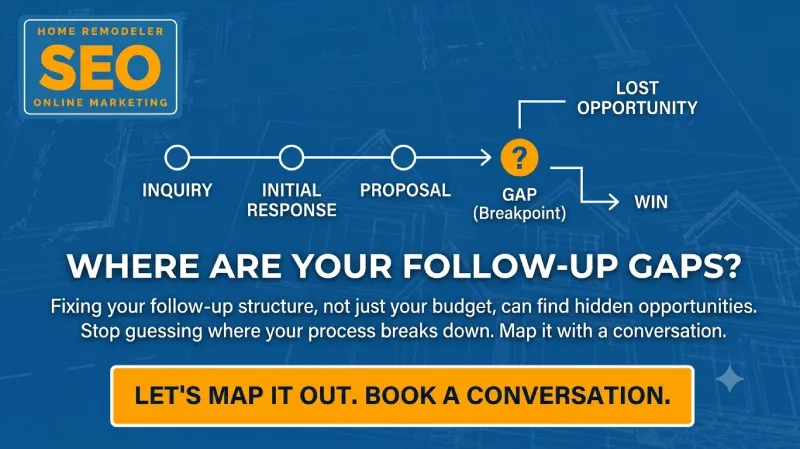
And if you're not sure where your current follow-up process breaks down, schedule a discovery call with us. We’ll help you map out your current process, identify where opportunities may be slipping through the cracks, and uncover ways to create a more consistent follow-up system.


